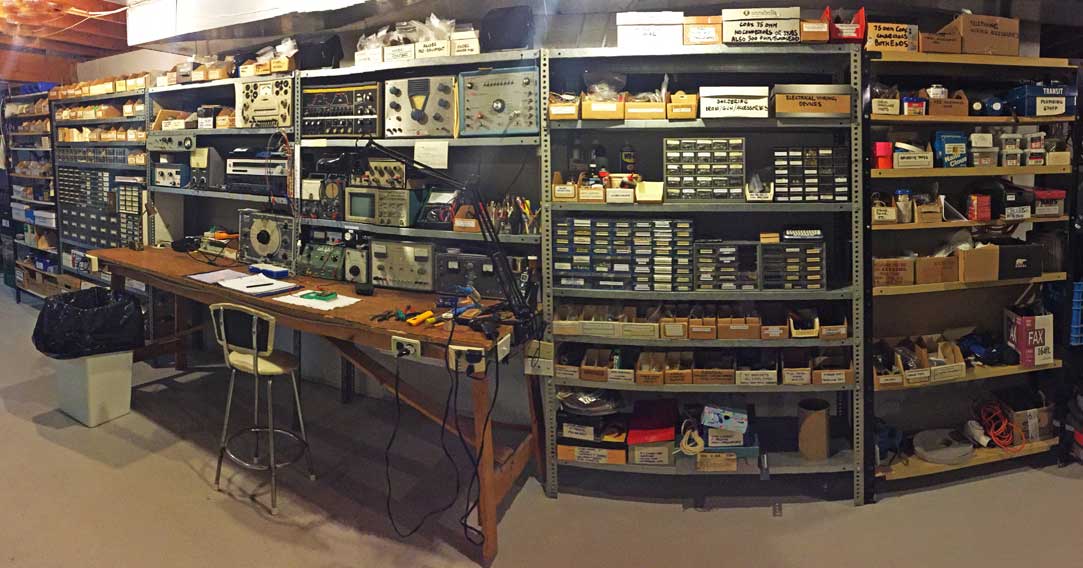
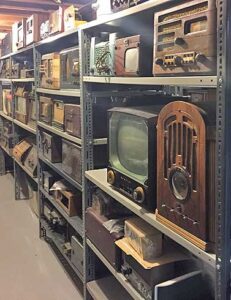
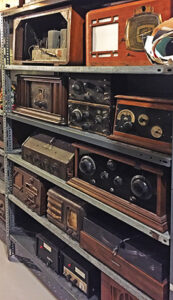
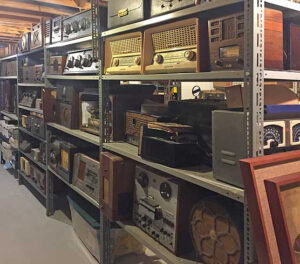
Vintage radio and electronics items which come my way run the gamut from “Excellent Condition” to “Basket Case” and everything in between. In most cases, it is possible to bring these stylish antiques back to their former glory, both cosmetically and functionally.
Every piece which I fully restore has undergone a thorough work-over, the aim being to ensure trouble-free operation and enjoyment for many years to come.
Every restoration includes the following important procedures:
- Complete cleaning of interior chassis and all components-removal of rust when present
- All controls, switches, tube sockets, and mechanical parts are cleaned, de-oxidized, and lubricated.
- Tubes are tested, and replaced when very weak or marginal. I use “new-old-stock” tubes for replacement if possible.
- Original electrolytic filter and paper capacitors are always replaced. For “museum piece” radios, I will often re-stuff the original capacitors to keep the same cosmetic look under the chassis.
- Safety Capacitors are used instead of any original paper power line filter capacitors.
- Resistors are all checked and replaced when resistance value is out of tolerance.
- If the power line cord is to be replaced, I use polarized plugs, if necessary, to eliminate any possibility of shock hazards.
- Full alignment is carried out for peak performance
- Plastic or Bakelite cabinets are cleaned and polished. Optionally, and upon request, wooden cabinets are stripped and re-finished only when it is impossible to make the original finish presentable. My belief is that an antique piece should look like one, giving it that added element of character.
- The final step in the restoration process is to completely assemble the unit, and run it under normal operating temperature conditions for at least 3 hours. This is done to test reliability.